When you buy through links on our articles, Future and its syndication partners may earn a commission.

We've all had the thought — wouldn't it be nice if summer were just a little longer? Well, it might become a reality in the not-too-distant future. And, unfortunately, that's not a good sign for our planet.
According to a new study, climate change — primarily driven by human activities like burning coal for cheap power — could lengthen summers in Europe by 42 days by the year 2100. That's because the "latitudinal temperature gradient" (LTG), or the temperature difference between the North Pole and the equator, is currently decreasing. A higher LTG drives wind patterns across the Atlantic Ocean, bringing about seasonal temperature changes in Europe. With a lower LTG, summer weather patterns and heat waves will last longer across the continent.
"Our findings show this isn't just a modern phenomenon; it's a recurring feature of Earth’s climate system. But what's different now is the speed, cause and intensity of change," Dr. Laura Boyall, an author of the study, said in a statement."
To peer back into Earth's climate history in Europe, researchers analyzed layers of mud at the bottom of lakes. Deposited seasonally, these sediments paint a clear timeline of winters and summers as far back as 10,000 years ago.
Around 6,000 years ago, European summers were about eight months long due to natural fluctuations in the LTG. But now, the Arctic is warming up to four times faster than the global average, in part due to greenhouse gas emissions. For every degree Celsius the LTG decreases, European summers will grow by about six days. Thus, according to current climate projections, Europe will have 42 extra days of summer by 2100.
"Our research has uncovered that European seasons have been driven by the temperature gradient over thousands of years, which provides useful insight that can be used to help predict future changes more accurately," says Dr. Celia Martin-Puertas, lead researcher from Royal Holloway at the University of London. "The findings underscore how deeply connected Europe’s weather is to global climate dynamics and how understanding the past can help us navigate the challenges of a rapidly changing planet."
A study on the research was published on Nov. 19 in the journal Nature Communications.

A powerful geomagnetic storm created a series of brilliant auroras recently for observers across North America.

The images reveal the storm's incredible power and offer vital insights into how such hurricanes form.

This satellite image reveals not only geological beauty but also the deep ties between landscape, climate and history in one of the world's driest deserts.
NEUESTE BEITRÄGE
- 1
 Struggling to keep your New Year's resolutions? Here's how to keep yourself on track10.01.2026
 - 2Mom warns of Christmas gift hazard as daughter recovers in hospital24.12.2025
- 3‘Serving is not just a place’: Bayside Church Granite Bay reimagines annual mission amid conflict in Mexico27.03.2026
- 4Well informed: How to Take full advantage of Your Gadgets01.01.1
- 5Vote In favor of Your Favored Pizza Cover05.06.2024
- 6Washington resident contracts bird flu, first human case in U.S. since February14.11.2025
- 7Sources: IDF does not actually know how many ballistic missiles Iran has left05.04.2026
- 8IDF struck Iran's largest petrochemical plant, second facility hit in two days, Katz confirms06.04.2026
- 9SF Chinatown's historic Empress of China building being revived into cultural campus02.04.2026
- 10Geminid meteors streak under green sky | Space photo of the day for Dec. 19, 202519.12.2025
- 116 Arranging Administrations to Change Your Open air Space06.06.2024
- 12Watch live as near-Earth asteroid Eros buzzes the Andromeda Galaxy on Nov. 30 (video)29.11.2025
- 13Explosions heard across Tehran after IDF announces wave of strikes on regime terror targets26.03.2026
- 14New heart disease calculator predicts 30-year risk for young adults17.11.2025
- 15Inconceivable Spots To Stargaze All over The Planet06.06.2024












Ähnliche Artikel
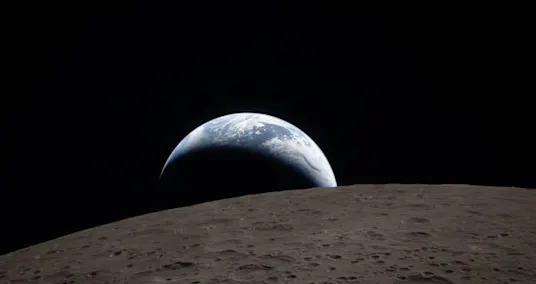
- Artemis 2 captures historic 'Earthset' photo | Space photo of the day for April 7, 202607.04.2026
- Tesla Germany Registrations Quadruple to 9,252 Vehicles in Best March Ever07.04.2026
- What's going on with Katseye? The Manon Bannerman hiatus drama, explained.07.04.2026
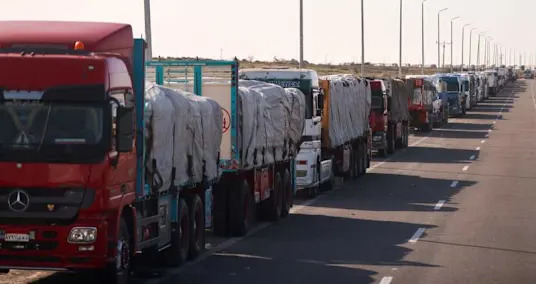
- Two IDF officers, civilian face indictment in alleged Gaza aid-truck smuggling scheme07.04.2026
- West Palm Beach Shorecrest, renderings of downtown waterfront condo07.04.2026
- Artemis II astronauts make long-distance call to the space station as they head home from the moon07.04.2026
- Tuesday, April 7. Russia’s War On Ukraine: News And Information From Ukraine07.04.2026
- The Eastern Bongo, Kenya’s Rare Forest Antelope on the Brink07.04.2026
- U.K. blocks Kanye West from entering Britain to headline now canceled festival: What led to the ban07.04.2026
- Russia confirms 16 Cameroonian soldiers killed in Ukraine war07.04.2026
- First Phosphate advances battery-grade phosphate project as analysts highlight strategic Federal support07.04.2026
- After fleeing past Hezbollah fighting, some Israelis on northern border vow to stay07.04.2026
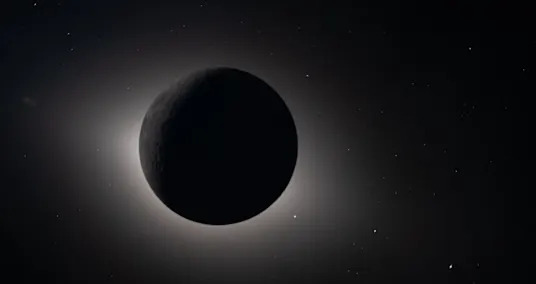
- 'Unreal' solar eclipse: Artemis 2 crew just saw one of the rarest sights in spaceflight history07.04.2026
- Chinese construction workers in Israel: 'I’d rather be bombed than live in poverty'07.04.2026
- Broken toilet, T-shirts on windows and collecting saliva: The weirdness of daily life aboard Orion07.04.2026
- Czech Republic caps fuel prices amid Iran war energy crisis07.04.2026
- NASA releases stunning new images captured by the Artemis II moon mission, including 'Earthset' and a solar eclipse from space07.04.2026
- Amid Iran war, 53 of Israel's future scientists showcase projects in Jerusalem contest07.04.2026
- Iranian-linked drone attack kills Kurdish couple in northern Iraq07.04.2026
- Thousands of small fish defy gravity to climb Congo waterfall07.04.2026